
Mysuru: The Echoes of Empire
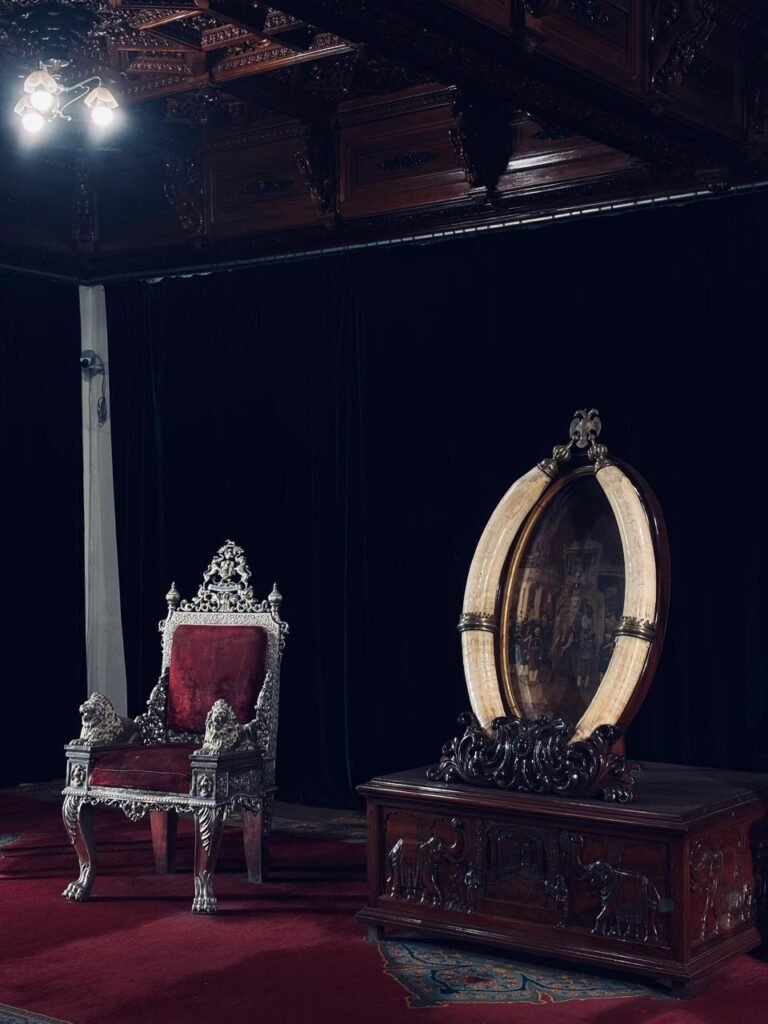
Tracing Echoes of Empire: A Fine-Art Architectural Walk Through Colonial Mysore
Introduction: When Architecture Remembers
Some cities wear their history loudly; Mysore carries it like a fading perfume — subtle, refined, and lingering in the quiet corners of its streets.
Long before modern skylines and glass façades appeared, Mysore’s colonial-era architecture shaped the rhythm of its civic life. These structures were not mere buildings; they were statements of power, education, culture, and identity. Today, they stand as aging custodians of a time when Indo-European aesthetics merged with local sensibilities to create an architectural language that was uniquely Mysorean.
For a fine-art architectural photographer, Mysore offers a canvas painted with nostalgia, subtle grandeur, and time-weathered beauty — the kind that whispers, rather than declares. To photograph it is to document memory itself.
This journey isn’t about the palaces most tourists celebrate. It is about the urban colonial soul of Mysore — its civic buildings, educational institutions, markets, boulevards, and cultural spaces that once defined an era and now wait, gracefully, to be seen with respect.
⸻
Understanding the Colonial Imprint on Mysore’s Urban Identity
Colonial architecture in Mysore was never a copy-paste of British design.
Unlike cities where colonial structures imposed dominance, Mysore experienced a hybrid evolution. The Wodeyar kings, far from passive observers, embraced certain Western influences to modernize Mysore with elegance, not erasure.
This gave birth to an architectural landscape that blends:
• Neoclassical symmetry and order
• Gothic Revival arches and spires
• Indo-Saracenic domes and ornamentation
• Art Deco modernity of the 1930s–50s
Rather than overpowering the city’s native identity, colonial architecture here became a quiet conversation between Western form and Mysorean culture.
As a photographer, approaching these spaces requires sensitivity to three layers:
1. Aesthetic Value – Composition, geometry, form
2. Historical Memory – Who built it, who used it, why it mattered
3. Urban Emotion – How the building breathes within the city today
To shoot Mysore’s colonial buildings well is to balance all three.
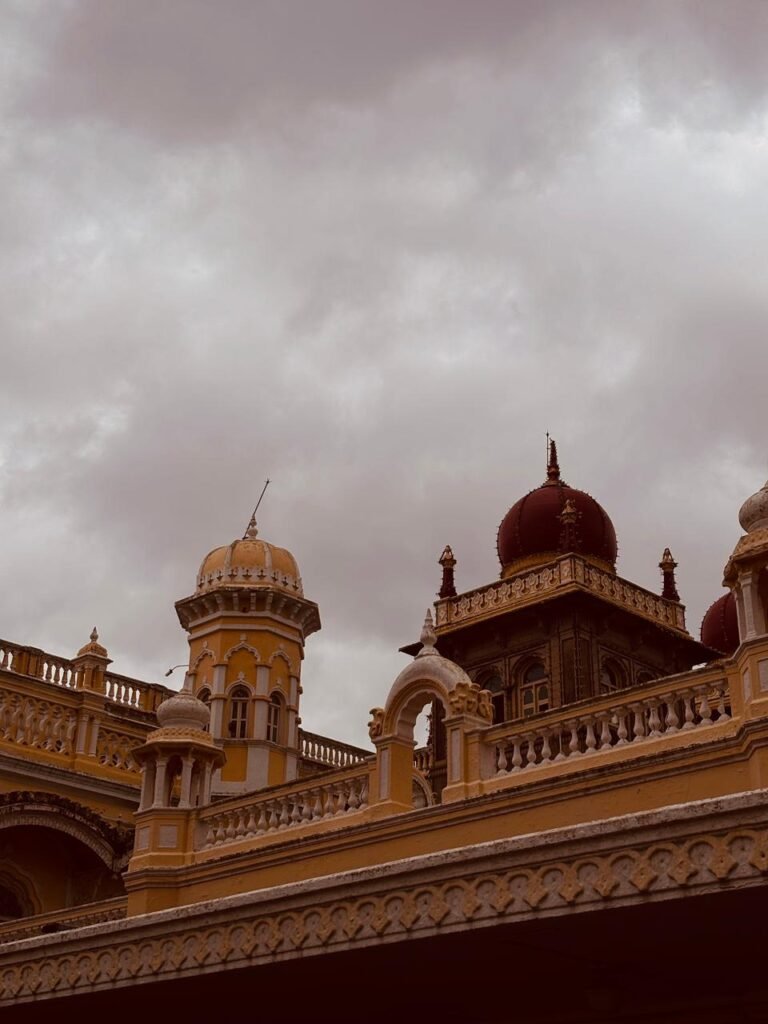
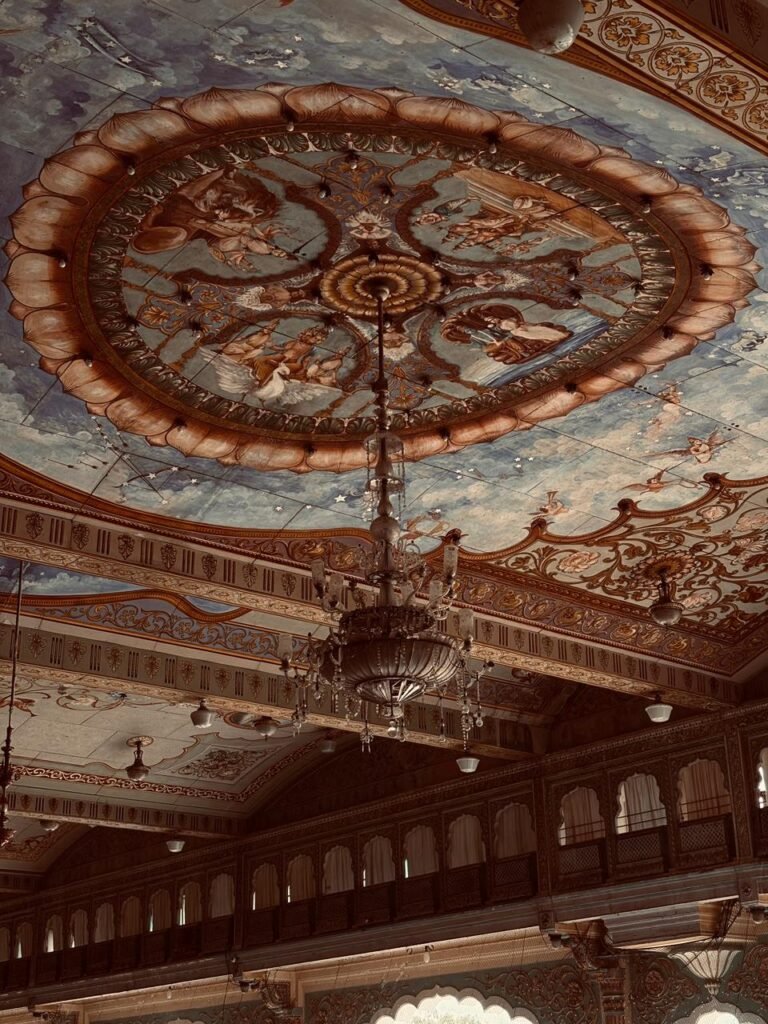
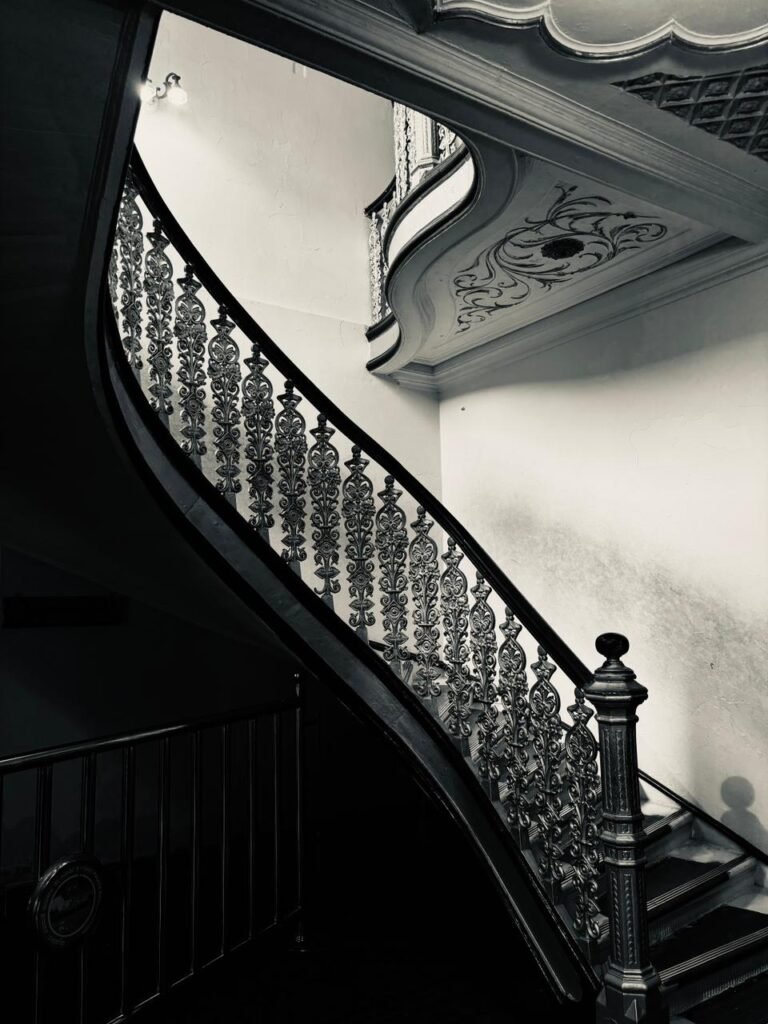
Crawford Hall — Academic Grandeur in Stone
If there is one building that represents Mysore’s colonial academic ethos, it is Crawford Hall, the administrative heart of the University of Mysore.
Architectural Essence
• Neoclassical with Indian Adaptation
• Grand Corinthian columns along a sweeping façade
• High arched portico that lends a sense of ceremonial arrival
Though inspired by Western classical architecture, the structure hums with Mysorean intentionality — it carries intellectual pride, not imperial dominance.
Photographer’s View
Crawford Hall is visually strongest when approached as a study of discipline and symmetry.
Try exploring:
Compositional Notes
• Shoot head-on from the entrance axis for a formal architectural portrait
• Use steps and foreground pathways as leading lines
• Ideal focal lengths: 35mm for environmental context, 85mm for architectural isolations
Mood to Capture:
Solemn, scholarly elegance — as if the walls have absorbed decades of academic pursuit.
A personal tip: Arrive early when the morning light grazes the columns softly; the interplay of highlight and shadow adds sculptural depth.
⸻
Lansdowne Building –A Quiet Testament to Everyday Colonial Life
If Crawford Hall represents prestige, the Lansdowne Building represents the social pulse of old Mysore.
Built in 1892, this iconic commercial block has seen generations pass under its corridors — students, shopkeepers, book buyers, artists, musicians, lovers, revolutionaries, and dreamers.
Architectural Identity
• Colonial commercial typology fused with local functionality
• Repetitive arches forming a rhythmic façade
• Ornamental ironwork, balconies, and long shaded corridors
This was architecture meant for public life, not ruling class display — and that is what makes it emotionally rich for a photographer.
Photographer’s View
Lansdowne is best shot like a portrait of a living memory rather than a static building.
Consider focusing on:
• Peeling paint, worn arches, hand-painted shop signs
• Textures that show time rather than decay
• Human interactions — vendors opening shutters, a cyclist passing by, a reader at a bookstore
Stylistic Recommendation:
Experiment with monochrome or muted color palettes to preserve nostalgia.
This is one of Mysore’s few spaces where imperfection is the story.